
How the Specification Is Enforced
Three things enforce the control points above: a written specification, an approved sample, and test results from the lot you are buying.
Alpinia galanga · Sliced
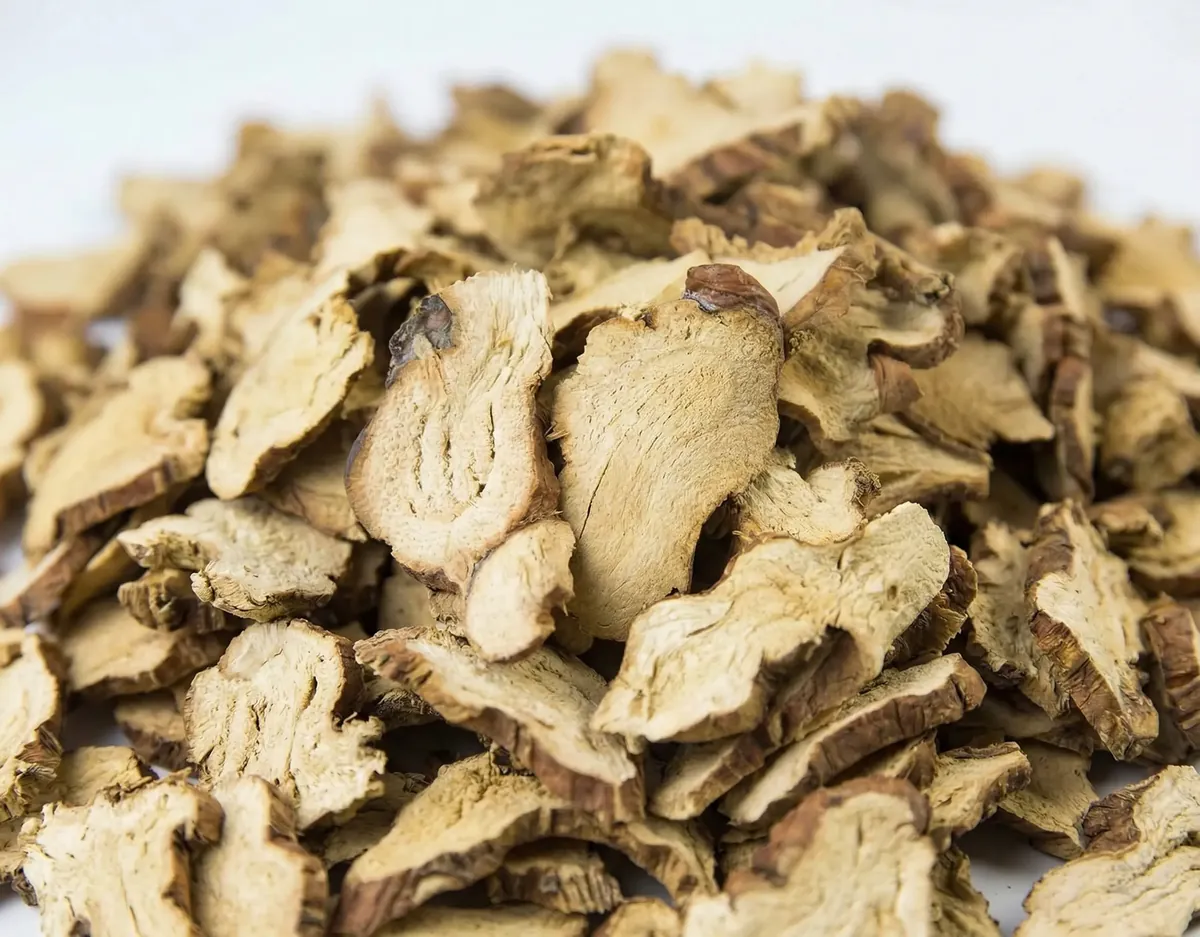
Dried galangal root (Alpinia galanga) from Indonesia, sliced for buyers who need a consistent cut for infusion, spice blends, seasoning, or extraction. Thickness, appearance, moisture, and packing are all written in the specification. You approve that specification before we commit a container.
Every order starts from a physical sample you approve. That approved sample, not a grade name, becomes the acceptance standard for the shipment.
This table is the control framework for dried galangal slices. The figures are the standard we produce to. Test results for your actual lot are confirmed against these figures before release. The exact limit inside each range is fixed in your written specification.
This material has several trade names. It is lengkuas in Indonesia, Siamese ginger in parts of the Western trade, and greater galangal in botanical listings. All three names refer to one species, Alpinia galanga, quoted against one written specification.
| Control point | Basis |
|---|---|
| Botanical identity | Alpinia galanga (greater galangal), confirmed per lot |
| Cut / thickness | 3–5 mm, cut to a uniform thickness |
| Moisture | 10–11% maximum; exact limit fixed per contract |
| Volatile oil | 1–3% |
| Foreign matter | 1–2% maximum; free of soil, grit, dust, and sack fiber |
| Color | Natural yellowish-white to pale light brown; no black spotting |
| Infestation | Free of live and dead insects |
| Microbiology & contaminants | Lab plan agreed per destination requirements |
| Packing | Sealed food-grade PE inner; PP woven, jute, or carton outer |
| Net weight per pack | 10, 20, 25, or 40 kg (22, 44, 55, or 88 lb) |
| Shelf life | 1–2 years in sealed packing, stored dry |
| Indicative price | On request, quoted against your brief |
| MOQ | On request, quoted against your brief |
Values are fixed per order in the written specification. Figures for the current lot are shared before release.
You approve a physical sample before any container order. That approved sample becomes the acceptance reference.
Format, tolerances, packing, and documents are recorded before production. Nothing depends on a verbal promise.
Trial quantities and mixed loads are reviewed before quotation. You can start below a full container.
Buyers order slices when the material is steeped, dosed, or fed into a process where piece size matters. Four buyer segments send most inquiries.
Tea & infusion manufacturers
Slice thickness controls the extraction rate and the behavior on teabag filling lines. The cut is fixed before the first production run.
Spice blending & seasoning
Wholesale blenders specify a consistent cut, so dosing by weight stays predictable across batches.
Food manufacturing
Paste and stock producers, including tom yum and curry paste lines, order slices to rehydrate or mill in-house.
Extraction
For extraction buyers, a minimum volatile oil level is agreed in writing and confirmed against the lot before release.
Packing has two layers to protect dried material from moisture during sea transport. A sealed food-grade PE liner goes inside. The outer layer is a PP woven sack, a jute sack, or a corrugated carton, whichever suits your handling. Net weight per pack is 10, 20, 25, or 40 kg (22, 44, 55, or 88 lb).
Every outer pack carries a printed label with the product name, net weight, batch number, production date, expiry date, and "Product of Indonesia". Shelf life is 1–2 years in sealed packing, stored dry.
Quantity per container is confirmed after you choose the packing. Bag size and stuffing method change the figure.
We file FDA prior notice before arrival. Facility registration details are provided with the shipping documents.
Residue limits for the destination are included in the lab plan before shipment, not tested after arrival.
A phytosanitary certificate is arranged per shipment to meet the importing country's requirements.
Payment terms and Incoterms are stated in the written quotation. See MOQ, Incoterms, and export documents →
Most disputes in dried spice trading start with a vague grade name. "Premium", "grade A", and "export quality" mean nothing in arbitration, because nobody wrote down what was measured.
Your first shipment starts with a physical sample of the cut you want, not with a container. You inspect the sample and approve it if it is right. That approved sample becomes the written acceptance reference for the order. If the arriving lot does not match the sample, you have a document as proof, not a dispute about wording.
For buyers new to Indonesian origin, this also limits the risk of the first purchase. Trial quantities are reviewed before quotation. You can test whether the cut suits your process before you order a full container.
Three things enforce the control points above: a written specification, an approved sample, and test results from the lot you are buying.
You approve a physical sample first. The written specification, not this website, is the acceptance basis. Before loading, you may appoint your own inspection agent to examine the shipment. We share photos of your actual lot before release.
Buy slices when the material is steeped, dosed, or filled on a line where piece size matters. Buy whole or chunk when you reduce the material on your own equipment and want to control particle size yourself. The two formats are priced and specified differently, so decide the format before you request a quotation.
The cut is defined by you, not by a house standard. You state the thickness your process needs. We produce a reference sample to match it. The approved sample then sets the tolerance for production.
Correct, and that is why every order is led by a written specification. We record the acceptance points first, you deal directly with the export desk, and you may appoint your own inspector at loading. For buyers who have received a shipment that did not match a "premium quality" promise, that structure is the protection.
Contact us
Send your requirements: format, target specification, volume, and destination port. The export desk replies with a specification draft and the next steps for sample and quotation.
Email[email protected] WhatsApp+62 813 2725 5570PT Tri Global Export · Export desk, Indonesia