
How the Piece Definition Is Enforced
A piece definition protects you only if it is written before allocation and verified against the lot before release. Our quality page describes that sequence in full.
Alpinia galanga · Whole & chunk
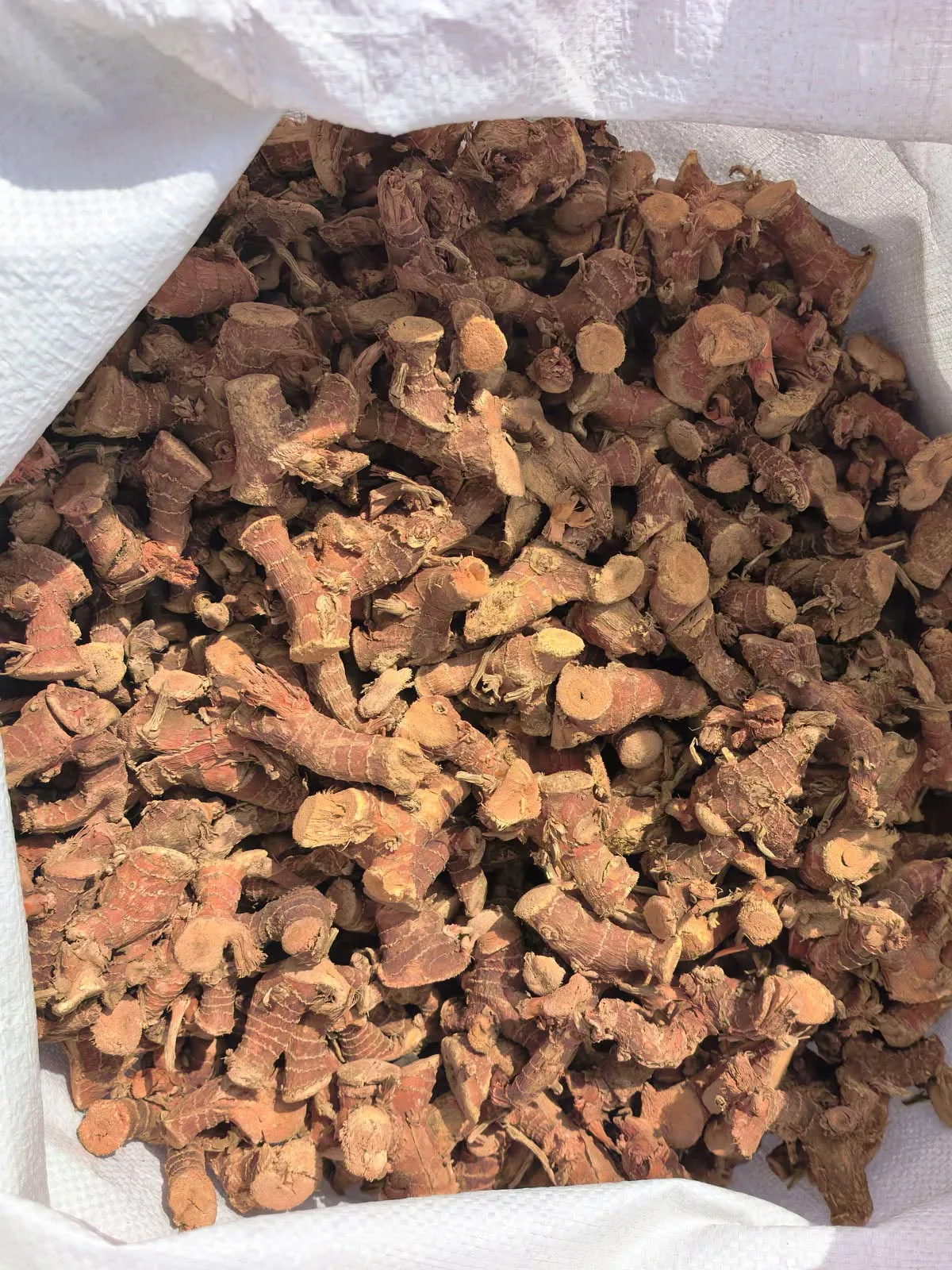
Dried galangal root (Alpinia galanga) from Indonesia, shipped as larger pieces instead of a finished cut. You reduce the material on your own line. Two variables decide whether a lot suits you: the piece size and the share of broken pieces. Both are agreed in writing before allocation, then checked against the lot you are buying.
You see photographs of the offered lot before you commit to it. On arrival, the shipment is measured against the tolerance you accepted in writing.
This table uses the same control points as our sliced format, without the points that only describe a cut. Figures for this format are set against your piece definition, not published as one standard. Piece size changes how the material dries and how it behaves on your line.
| Control point | Basis |
|---|---|
| Botanical identity | Alpinia galanga (greater galangal), confirmed per lot |
| Piece definition & broken tolerance | Buyer-defined; tolerance for broken pieces agreed in writing |
| Moisture | Target agreed in writing; current-lot data on release |
| Volatile oil | Minimum agreed for extraction applications |
| Foreign matter & defects | Tolerance agreed; verified by sample or inspection |
| Microbiology & contaminants | Lab plan agreed per destination requirements |
| Bulk density / packing yield | On request, quoted against your brief |
| Packing | Sealed food-grade PE inner; PP woven, jute, or carton outer |
| Net weight per pack | 10, 20, 25, or 40 kg (22, 44, 55, or 88 lb) |
| Shelf life | 1–2 years in sealed packing, stored dry |
| Indicative price | On request, quoted against your brief |
| MOQ | On request, quoted against your brief |
Values are fixed per order in the written specification. Figures for the current lot are shared before release.
You approve a physical sample before any container order. That approved sample becomes the acceptance reference.
Format, tolerances, packing, and documents are recorded before production. Nothing depends on a verbal promise.
Trial quantities and mixed loads are reviewed before quotation. You can start below a full container.
Processors buy whole and chunk material when they want to control particle size themselves. From a supplier, they need a piece definition that stays the same from one shipment to the next, not a grade name.
Milling & grinding
Buyers with their own mills take larger pieces and grind to the mesh their product needs. They avoid paying for a cut they would grind away.
Extraction feedstock
Essential oil and oleoresin producers order bulk pieces against an agreed minimum volatile oil level. That level is confirmed on the lot before release.
Repacking
Importers who repack for retail or wholesale take whole rhizome when the piece appearance is part of their product.
Contract processing
Processors who cut to a third party's specification order a defined piece size, so their own yield stays predictable.
All three formats are one species, Alpinia galanga. It is called lengkuas in Indonesia and Siamese ginger in some Western markets. The three formats are the same rhizome at different stages of reduction. The right format depends on where piece size is decided in your process. Whole dried galangal is the rhizome dried close to its natural form. Chunk is that rhizome broken or cut into large irregular pieces. Slices are cut to a defined thickness before drying. For that reason, slice thickness can be specified exactly, while whole and chunk are defined by piece size and tolerance.
If you mill, extract, or cut in-house, larger pieces are usually the better choice. You avoid paying for a cutting step you would undo. Intact pieces protect the material during handling. You also keep control of the particle size your product needs. If your process steeps, doses, or fills the material as it arrives, choose slices. Examples are teabag lines, blends sold by weight, and pastes. In those processes, a consistent piece size is worth the cutting cost.
Between whole and chunk, the deciding factor is usually handling, not quality. Chunk fills a container more densely and feeds a mill more evenly. Whole rhizome looks better for repacking and lets you judge the material by eye. Both are quoted against a written piece definition with a stated broken-piece tolerance. That way, "chunk" means the same thing to you and to us before allocation.
Packing has two layers to protect dried material from moisture during sea transport. A sealed food-grade PE liner goes inside. The outer layer is a PP woven sack, a jute sack, or a corrugated carton, whichever suits your handling. Net weight per pack is 10, 20, 25, or 40 kg (22, 44, 55, or 88 lb).
Every outer pack carries a printed label with the product name, net weight, batch number, production date, expiry date, and "Product of Indonesia". Shelf life is 1–2 years in sealed packing, stored dry.
Quantity per container depends on bulk density and packing choice. We confirm the figure against your specification instead of quoting a fixed number.
We file FDA prior notice before arrival. Facility registration details are provided with the shipping documents.
Residue limits for the destination are included in the lab plan before shipment.
A phytosanitary certificate is arranged per shipment to meet the importing country's requirements.
Payment terms and Incoterms are stated in the written quotation. See MOQ, Incoterms, and export documents →
A piece definition protects you only if it is written before allocation and verified against the lot before release. Our quality page describes that sequence in full.
Whole is the rhizome dried close to its natural form. Chunk is that rhizome broken or cut into large irregular pieces. Chunk loads more densely and feeds a mill more evenly. Whole rhizome looks better for repacking. Both are supplied against a written piece definition with a stated broken-piece tolerance.
Yes. For extraction applications, a minimum volatile oil level is agreed in writing before allocation. That level is confirmed against the current lot before release. We do not publish a fixed figure, because the correct number depends on the lot you are buying.
You approve a physical sample first. The written specification, not this website, is the acceptance basis. Before loading, you may appoint your own inspection agent to examine the shipment. We share photos of your actual lot before release.
Yes. Trial quantities and mixed loads are reviewed before quotation. You can confirm that the material suits your mill or extraction process before you commit to a full container.
Contact us
Send your requirements: format, target specification, volume, and destination port. The export desk replies with a specification draft and the next steps for sample and quotation.
Email[email protected] WhatsApp+62 813 2725 5570PT Tri Global Export · Export desk, Indonesia