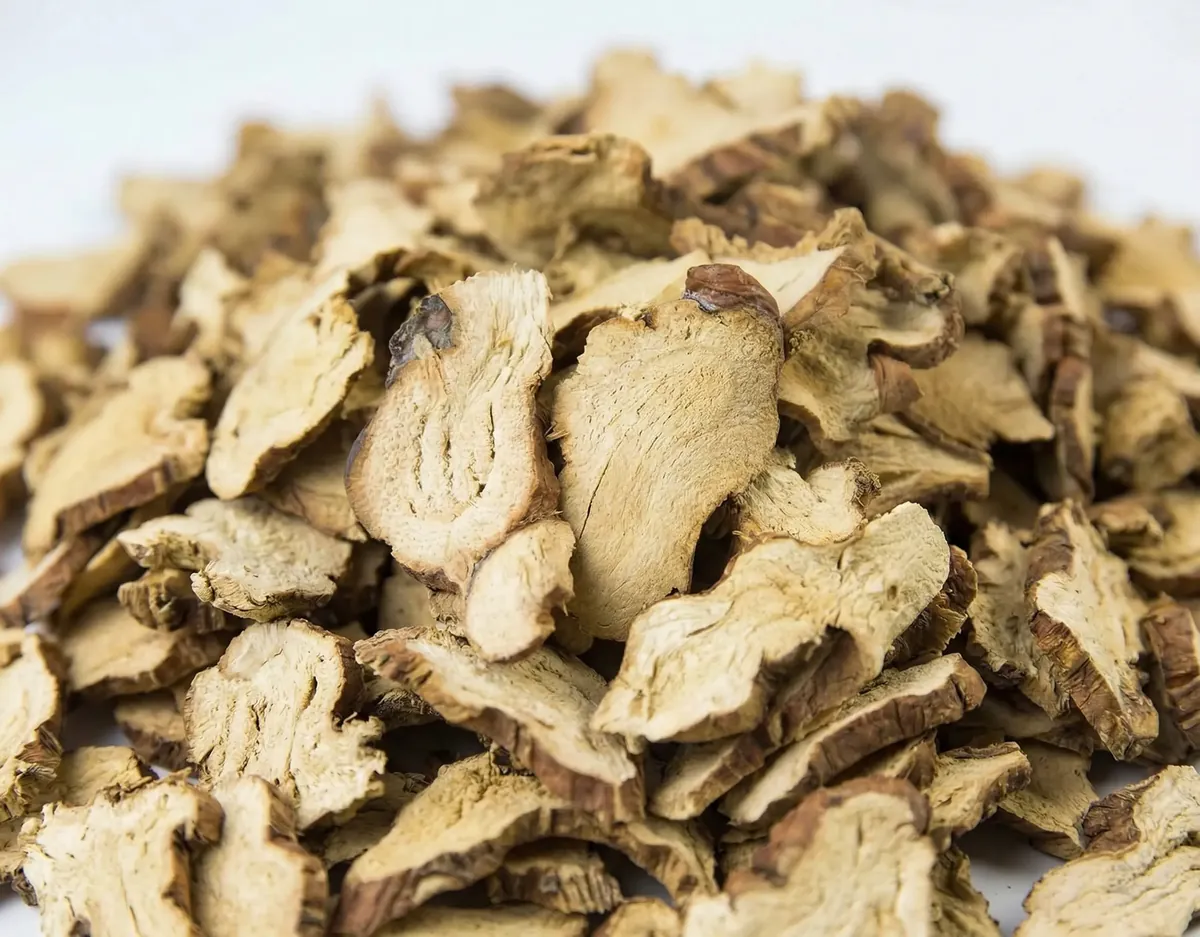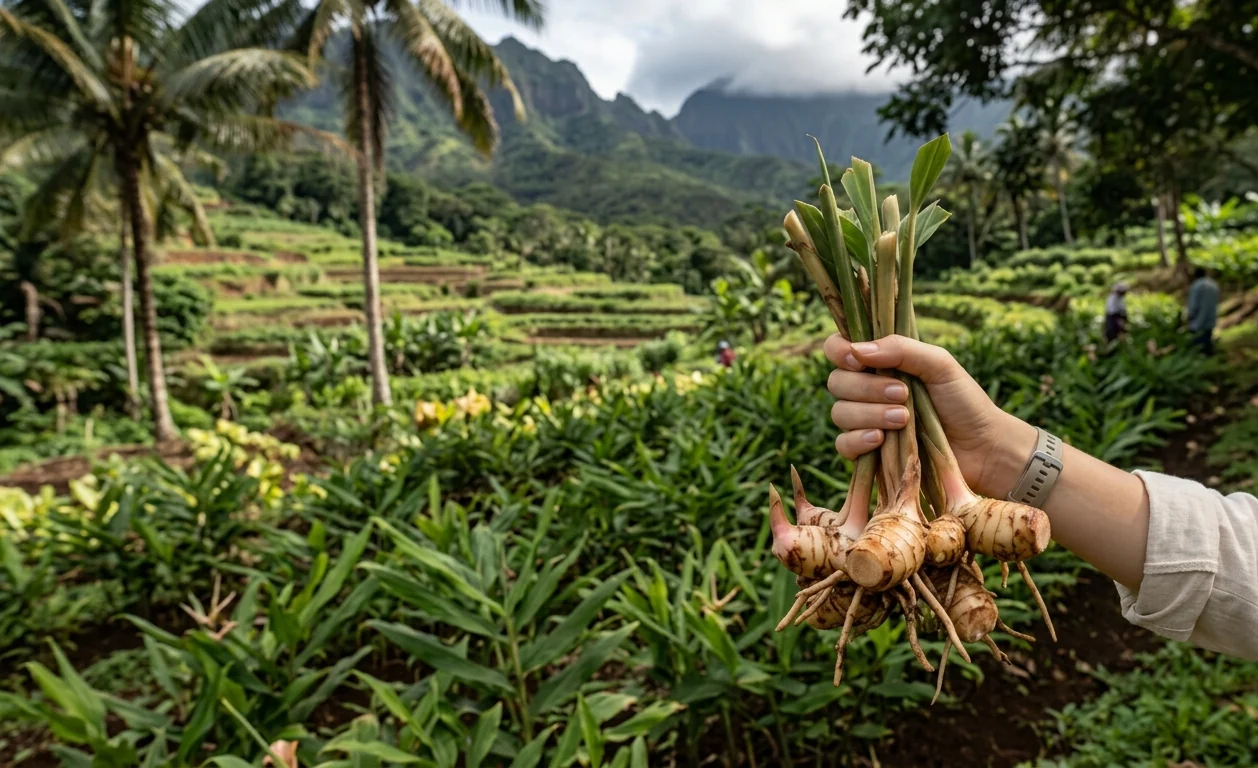
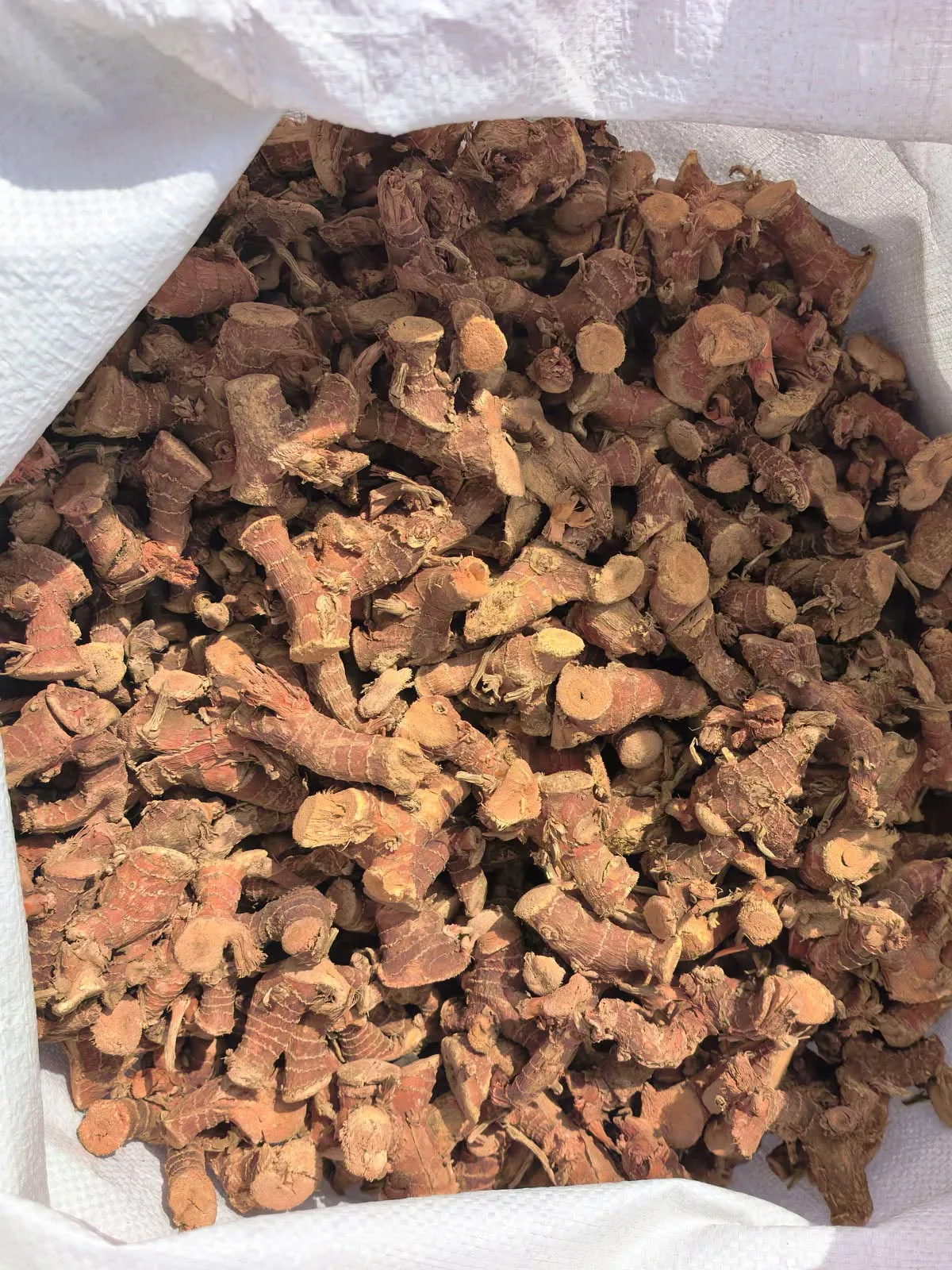
Dried galangal slices
- Cut
- Buyer-defined
- Basis
- Approved sample
Market notes
Nothing here can be assumed, because there is no shared reference to assume from. That makes the written specification less of a good habit and more of the only language both sides actually share.
Short answer: Galangal buyers serving Brazil should confirm use, format, cut or piece range, moisture, packing, volume, destination, documents, and trade term. Nothing can be assumed here, because there is no shared reference to assume from. The written specification is the only common language.
Galangal is not part of Brazilian cooking. There is no domestic culinary memory of it, no consumer expectation of how it should smell or look, and no trade convention that a supplier can lean on. Every other destination on this list gives a supplier something to reference — a familiar grade, a known trade name, a customer who has bought it for years. Here there is none of that.
Demand comes from two identifiable places instead. The Asian food channel is real and long-established — Brazil is home to one of the largest Japanese communities outside Japan, and Southeast Asian cooking has grown in the major cities — and it is served by importers and manufacturers producing sauces, pastes, and seasoning blends. Alongside that sits a flavour and seasoning industry formulating for local brands, which buys botanicals as technical inputs rather than as ingredients with a story.
Both are formulators rather than cooks. They work from a brief, and they cannot fall back on "the usual" because there is no usual. That is more demanding on the supplier than it sounds, and it happens to suit a supplier who works from written specifications rather than adjectives.
| Product | Relevance here | Suggested grade / format | Note |
|---|---|---|---|
| Dried galangal slices | Lead | Buyer-defined cut, sample-led | Bought by manufacturers formulating sauces and seasonings, and by importers supplying the Asian food channel. |
| Dried galangal whole & chunk | On request | Written piece definition | For flavour and seasoning producers reducing or extracting on their own equipment. |
Sampling matters more here than in most markets, because the buyer has no prior lot to compare against. Plan for it in the timeline.
Both products in detail
Imported food is subject to Brazilian sanitary control, and plant material travels with a phytosanitary certificate with conditions confirmed per consignment. Requirements are assessed for the specific commodity and origin, so the conditions applying to dried galangal from Indonesia are something your customs broker confirms for that combination rather than something either party assumes from a general description.
In a market with an established trade, a specification records an understanding that already exists. In a market without one, it creates the understanding. There is no shared picture of what an acceptable lot looks like, so every parameter that matters has to be named rather than implied — cut, moisture, cleanliness, the aroma characteristic the formulation depends on, and what happens if a lot sits at the edge of a range.
That is more work at the start and considerably less argument later. A buyer who has never bought this material before has no basis to say a lot is wrong except the document you both signed, which is exactly the position we would rather be in.
Where a buyer has no reference lot, an approved sample becomes the reference. It is worth treating that step seriously and building it into the timeline rather than compressing it — the approved sample is what every later shipment is measured against, and on this route the freight time makes a repeat sampling round expensive in weeks rather than money.
Santos for most shipments, serving the São Paulo industrial region where much of the food manufacturing sits. Itajaí and Paranaguá serve the south, and Suape the northeast.
Tanjung Priok to Santos, sailing schedule and transit stated in the quotation for the booking offered. This is one of the longer routes on our destination list and almost always involves transhipment, so the transfer point belongs in the quotation rather than only the total.
On a long route with a first-time buyer, the sample and its approval are a scheduling item rather than a courtesy. Say at enquiry whether you need a sample before committing and we will plan the production slot around the approval rather than around the order date.
The cargo crosses several climate zones and may wait at a transhipment port. Liner and ventilation are agreed before production rather than left to the packer, and a route with a transfer has less margin than a direct one.
Enquiries arrive in Portuguese and English. Because there is no settled Brazilian trade name for this rhizome, the botanical name Alpinia galanga is not a formality here — it is the only description that reliably means the same thing to both parties, and it is what prevents a related species being supplied or expected by mistake. Where a Portuguese or English common name appears in an enquiry, confirming it against the botanical name is worth the extra line.
Commercially, expect terms and lead time to be discussed alongside price because the route is long, and expect the sampling round to be part of the negotiation rather than a step after it. A first order here is genuinely a first order — for both sides.
Approve a physical sample before any container commitment. The approved sample becomes the acceptance reference.
Format, tolerances, packing, and documents recorded before production. No verbal promises.
Trial quantities and mixed loads are reviewed before quotation — you are not forced into full-container risk.
Tell us what the formulation needs to do rather than what grade you think you want, and we will propose the parameters that actually control it — cut, moisture, cleanliness, and where relevant the volatile oil expectation. In a market with no reference lot, starting from the application is more reliable than starting from a grade name.
Because the approved sample becomes the written reference and later shipments are measured against it rather than against a general description. That is the point of doing the sampling round properly rather than quickly — it is the only reference either of us will have.
Possibly, and possibly not — several related rhizomes are sold under overlapping common names, and they are not interchangeable in a formulation. This is why enquiries are best anchored to Alpinia galanga rather than to a common name. Send us a photograph or the name your supplier uses and we will tell you whether it is the same species.
Mainly in weeks rather than money. Plan the sampling round into the schedule rather than after it, because a repeat sample on this route costs a month before anything is even quoted. Tell us at enquiry if you need a sample first and we will build the timeline around that.
Certificates are issued in English as the trade language, which is what your broker and the authorities will expect. If your internal file needs a Portuguese version of the specification we can provide one alongside it — tell us at enquiry so both are issued together rather than one being requested later.
Destination is pre-filled. Tell us what the formulation needs to do rather than a grade name, and whether you need a sample before committing — on this route that changes the timeline more than anything else.
Complete briefs receive a substantive reply from the export desk — not an autoresponder. Incomplete enquiries receive clarifying questions the same day.