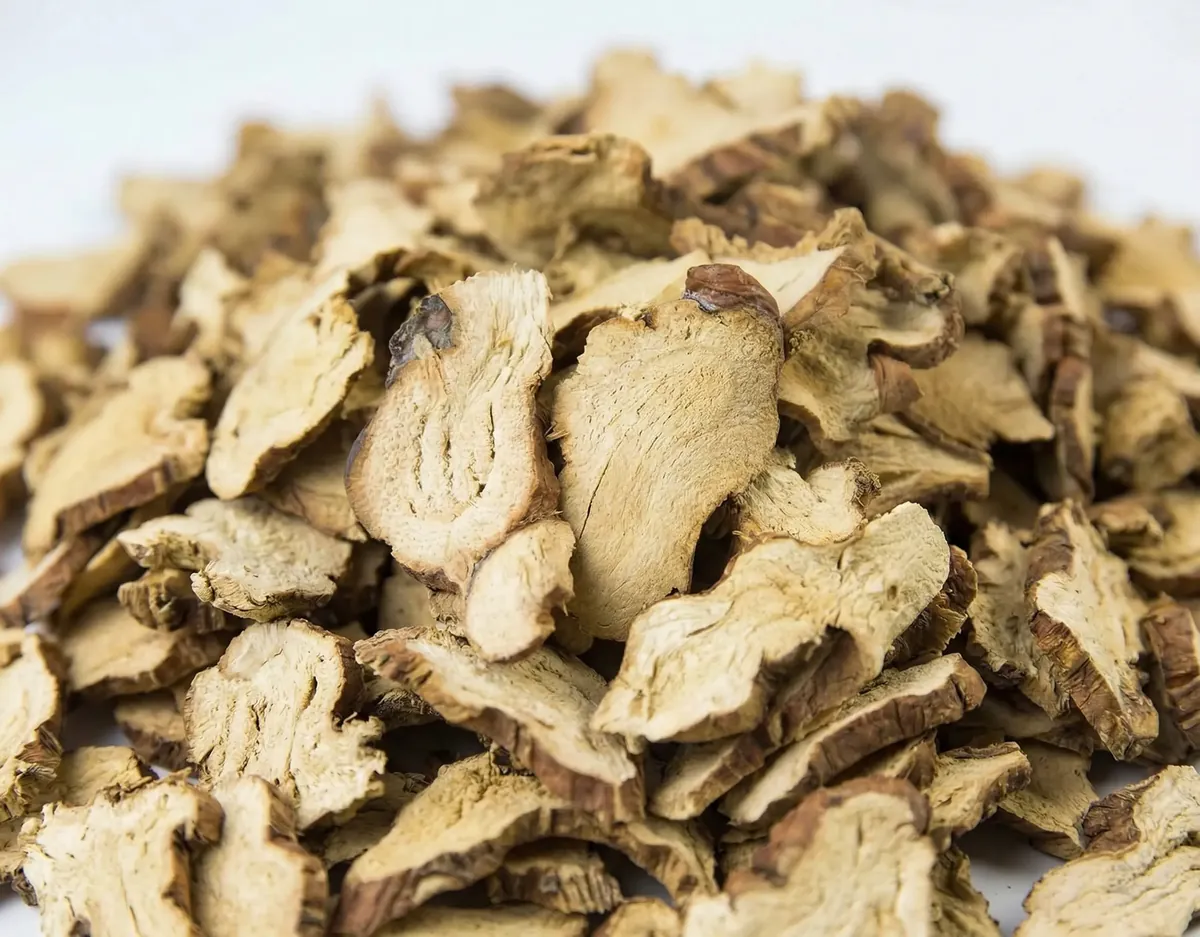
Dried galangal slices
- Cut
- Buyer-defined
- Basis
- Approved sample
Market notes
This is the one destination that produces the same commodity at scale and supplies it to half the other markets on this list. The first question here is not whether our material is good. It is why import it at all.
Short answer: An answerable galangal brief for China includes application, preferred format, physical tolerance, moisture, packing, order size, destination, documents, and Incoterm. The one destination that grows the same commodity at scale. The first question is not whether our material is good, but why import at all.
China grows, dries, grades, and exports galangal in volume, and a good deal of what reaches other markets on this list originates there. Any supplier offering an imported alternative is competing against domestic material on its own ground, where it is cheapest and best understood. Pretending otherwise would waste your time.
So the honest position is that importing only makes sense for specific reasons, and there are three we see. A buyer may need a profile that differs from what domestic supply gives them, because species and growing origin are not interchangeable. A buyer may want a second origin to reduce dependence on a single harvest region. Or a buyer's own downstream customer may specify origin, in which case the requirement is not really theirs at all.
If none of those apply to you, domestic supply is probably the right answer and we would rather say so than argue. Where one of them does apply, the conversation is unusually straightforward: you already know the commodity, so the discussion moves immediately to specification, consistency, and documentation rather than to persuasion.
| Product | Relevance here | Suggested grade / format | Note |
|---|---|---|---|
| Dried galangal whole & chunk | Lead | Written piece definition | Buyers here are equipped to sort, cut, and mill, and a larger piece leaves the reduction decision where the capability already sits. |
| Dried galangal slices | On request | Buyer-defined cut, sample-led | Where a defined cut goes directly into a blend or a pack without further handling. |
Format preference here follows processing capability rather than convenience — most buyers can reduce material themselves and would rather.
Both products in detail
China grows and processes galangal at scale and supplies it to several of the markets on this list. So the honest starting point is not what the paperwork requires but whether importing solves anything: a profile domestic supply does not give, a second origin held for resilience, or a downstream customer who specified where the material comes from. If none of those applies, no amount of procedure makes the order sensible.
We are not going to argue that Indonesian material is better. In a market that produces its own, that claim is settled by the first lot rather than by a website, and making it costs credibility we would rather spend elsewhere. What we can say is what our material is, in writing, and let it be compared against what you already buy.
There is a version of this enquiry that is purely about resilience: a second qualified origin that is not called on every month but exists, documented and sampled, for the season when the first one is short. That is a different commercial conversation from a volume tender, and it is worth saying which one you are having — the registration and testing work is the same, but the timeline and the volumes are not.
China requires overseas food establishments exporting to it to be registered before import, and the arrangement is handled ahead of shipment rather than discovered at the port. For a buyer this is routine administration; for a supplier it is a determinant of how soon a first order can move at all. It is worth raising in the first exchange rather than the fifth.
Declaration, arrival inspection, and a phytosanitary certificate per consignment work much as they do elsewhere. The one thing not to assume is the test panel: it is set against the requirements applying here, and a European, Japanese, or American scope does not transfer.
Shanghai and Ningbo for buyers in the east, Guangzhou and Shenzhen for the south, and Qingdao or Tianjin where a northern routing suits the processing location.
Tanjung Priok to the port of discharge, sailing schedule and transit stated in the quotation for the booking offered. This is among the shorter routes on our destination list, and services are frequent.
Where an exporter is registered, the identifiers on the packaging and the documents have to agree with what was registered. A mismatch between a commercial description and a registered one becomes a delivery problem, and it is avoidable entirely at the specification stage.
A buyer who also produces already has a handling standard, and it was written for material arriving from its own supply base. Ask for it rather than proposing ours: matching an existing intake is faster than persuading a warehouse to change how it receives a single origin.
Written specifications here generally carry both a Chinese trade name and either the English term or the botanical one. Because several related rhizomes are traded under overlapping common names in this region, anchoring the enquiry to Alpinia galanga removes an ambiguity that matters commercially — a substitution that is easy to make by accident is expensive to discover after milling.
Commercially, expect a price-sensitive negotiation and expect it to be informed, because the buyer has a domestic reference point we do not. That is not a reason to discount; it is a reason to be precise about what is being compared. A specification argued over before the order is a specification nobody disputes afterwards.
Approve a physical sample before any container commitment. The approved sample becomes the acceptance reference.
Format, tolerances, packing, and documents recorded before production. No verbal promises.
Trial quantities and mixed loads are reviewed before quotation — you are not forced into full-container risk.
Frequently you should not, and we would rather say that than argue. The reasons that do hold are specific: a profile domestic supply does not give you, a second origin to reduce exposure to one harvest region, or a customer who specified origin. If none of those apply, domestic supply is the right answer.
Growing origin and handling affect the material, and buyers who use both generally have a view on where each fits. What we will not do is claim ours is better in the abstract — that is unprovable and you would find out in one lot. Send us the parameters you compare on and we will tell you where we sit.
Ask directly and you will get a direct answer rather than a hedge. It is the fact that determines the timeline for a first order, and it is better established at enquiry than discovered after a sample is approved.
A certificate of origin, plus documentation that ties the lot you receive to the material we shipped rather than to a general statement about our supply base. If your customer requires a particular form of evidence, tell us at enquiry — retrofitting proof of origin is not possible once lots are mixed.
Yes, and it is one of the genuine advantages of this destination. Frequent sailings and a short crossing mean a trial lot does not carry the freight penalty it would on a European route. Tell us what you want to test and we will size it to answer that rather than to fill a container.
Destination is pre-filled. Tell us the product, the processing location, and why imported material is being considered — that last answer decides whether we are the right supplier at all.
Complete briefs receive a substantive reply from the export desk — not an autoresponder. Incomplete enquiries receive clarifying questions the same day.