
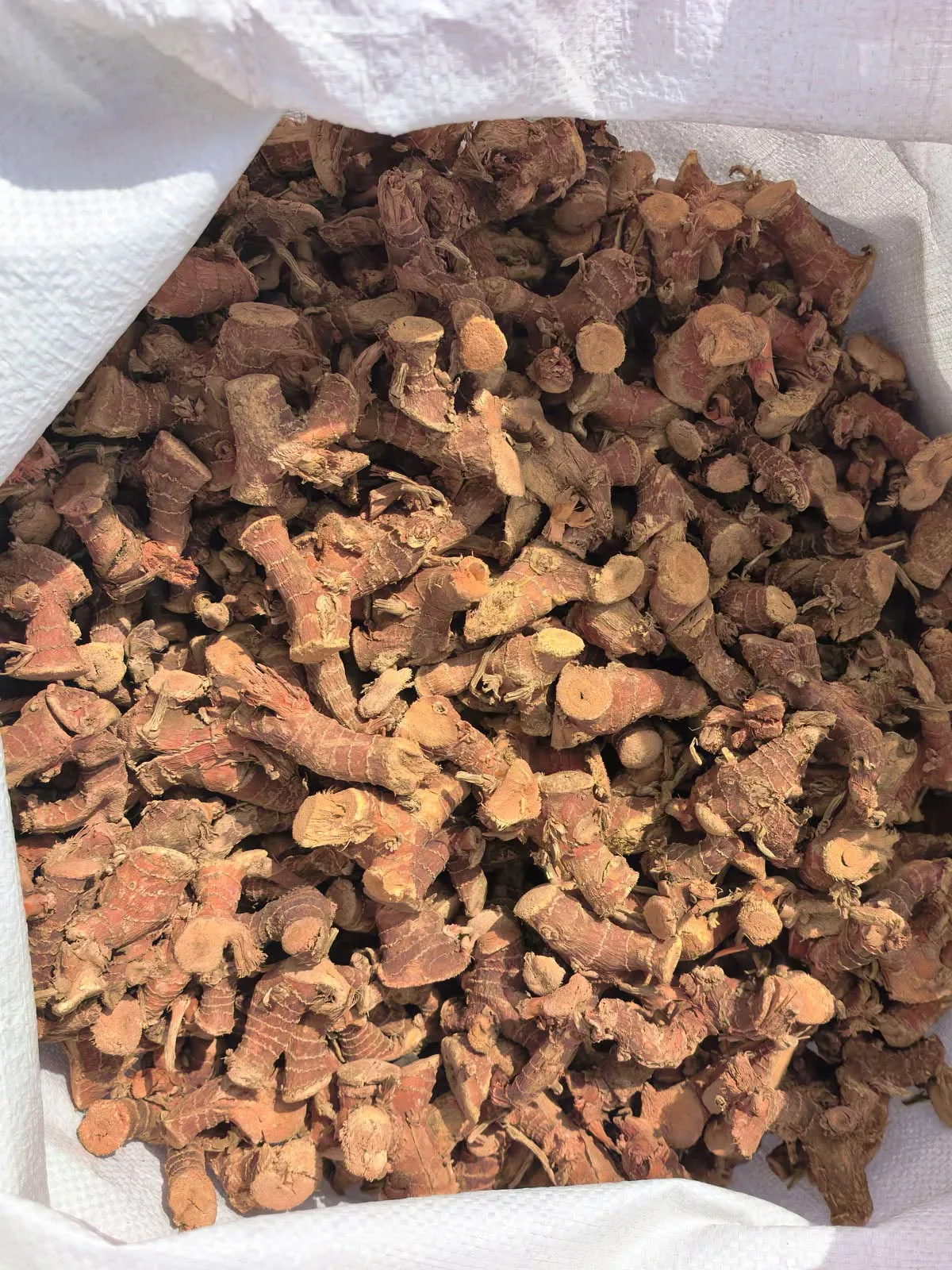
Dried galangal slices
- Cut
- Buyer-defined
- Basis
- Approved sample
Market notes
A large share of the year's demand lands in one window, and everything is planned backwards from a date that moves. Here the binding question is not price or grade. It is whether the cargo arrives in time to matter.
Short answer: For dried galangal in Egypt, define application, format, physical tolerances, moisture, packing, quantity, destination, documents, and Incoterm. A large share of the year lands in one window, and the date moves each year. Here the binding question is arrival timing, not price.
Egypt has a large domestic food market and an established blending and packing trade serving it. What sets the rhythm of buying is not the size of the market but its shape: a substantial part of annual consumption for products of this kind concentrates into the weeks around Ramadan, and packers build the year around it.
For an ingredient supplier that changes which question is actually being asked. Elsewhere a buyer is deciding what to buy and at what specification. Here a buyer has usually decided both and is deciding whether you can land it in time — because a lot that arrives after the window is not a late shipment, it is stock that has to be carried for most of a year.
One detail that catches suppliers who plan from last year's calendar: the date moves roughly eleven days earlier each year against the Gregorian calendar. A production slot that was comfortable last season is not automatically comfortable this one, and the arithmetic is worth doing rather than assuming.
| Product | Relevance here | Suggested grade / format | Note |
|---|---|---|---|
| Dried galangal whole & chunk | Lead | Written piece definition | Blending and packing operations reduce material themselves, and the larger format also holds condition better through a long storage period. |
| Dried galangal slices | On request | Buyer-defined cut, sample-led | Where a defined cut goes straight into a blend or retail pack close to the selling window. |
Where material is bought ahead and held, storage behaviour matters as much as arrival condition. Say how long it will sit before it is used.
Both products in detail
Working backwards is the only reliable way to plan this. From the selling window, subtract the time the packer needs to blend and pack, the inland leg, clearance, the sea transit, and the production and testing time at origin. What is left is the date an order actually has to be placed — and it is usually earlier than buyers expect the first time they do the sum.
We would rather do that arithmetic with you at enquiry than agree a delivery date that assumes everything runs at its fastest. Tell us the window you are supplying and we will tell you the honest last date for an order, including what we would need to hold back if the schedule is tight.
Material bought for a concentrated window is frequently landed early and held. That makes the moisture figure a storage question rather than only an arrival question, and it makes packaging that survives months in a warehouse more valuable than packaging that merely survives the voyage. Tell us how long the lot will sit before it is used and the specification is written for that period rather than for the day it lands.
Imported food is subject to national control and plant material travels with a phytosanitary certificate, with conditions confirmed per consignment. Where an import permit or registration applies, documents may need to reference each other — a certificate and a permit that are each individually correct but do not cross-reference are a routine cause of cargo sitting.
Alexandria for most shipments, with Port Said and Damietta used depending on the buyer's inland position and berth availability.
Tanjung Priok to Alexandria, with the sailing schedule stated in the quotation. On a seasonal order the useful figure is not the transit alone but the transit plus a realistic margin — a schedule with no slack is a schedule that fails at the only moment it mattered.
Demand for space on this corridor is not evenly spread through the year either. If your window is fixed, the booking is worth securing well before the production slot rather than after it.
Material landed early and held needs an outer that stacks safely for months and a liner that holds condition in warm storage. Tell us the holding period and it is specified for that rather than for the voyage alone.
Enquiries arrive in Arabic and English, and written specifications generally carry the English trade term. Because several related rhizomes circulate under overlapping names in the regional trade, anchoring to Alpinia galanga is worth the extra line — particularly on a seasonal order, where discovering a substitution after arrival leaves no time to correct it.
Commercially, expect the conversation to move quickly once the window is agreed and slowly before it. Payment structure is worth settling alongside the schedule rather than after, because on a seasonal order a delay in arranging terms costs the same as a delay in production.
Approve a physical sample before any container commitment. The approved sample becomes the acceptance reference.
Format, tolerances, packing, and documents recorded before production. No verbal promises.
Trial quantities and mixed loads are reviewed before quotation — you are not forced into full-container risk.
Tell us the window you are supplying and we will work backwards through packing, inland, clearance, transit, and production to give you an honest last date — including what we would leave out if the schedule is tight. That date is usually earlier than it feels, and it is better known in advance than discovered.
Not by itself. The window moves roughly eleven days earlier each year against the Gregorian calendar, so a production slot that was comfortable last season can be tight this one. It is a small correction that is easy to forget and expensive to forget twice.
It should. A moisture figure written for arrival gives you no margin across months in warm storage, and packaging that survives a voyage is not the same as packaging that stacks safely for a season. Tell us the holding period and both are written for it.
That is precisely why we would rather quote transit plus a realistic margin than the fastest possible schedule. If the margin is not there, we will say so before the booking rather than after — a shipment that arrives late into this market is not a late delivery, it is a year of carried stock.
Often a good idea on a seasonal order, because it puts less of the year on a single sailing. Tell us the split you want and the production is planned around it — two smaller lots scheduled properly carry less risk than one large one timed perfectly.
Destination is pre-filled. Tell us the selling window you are supplying and how long the material will be held — on a seasonal order those two answers shape the quotation more than the volume does.
Complete briefs receive a substantive reply from the export desk — not an autoresponder. Incomplete enquiries receive clarifying questions the same day.