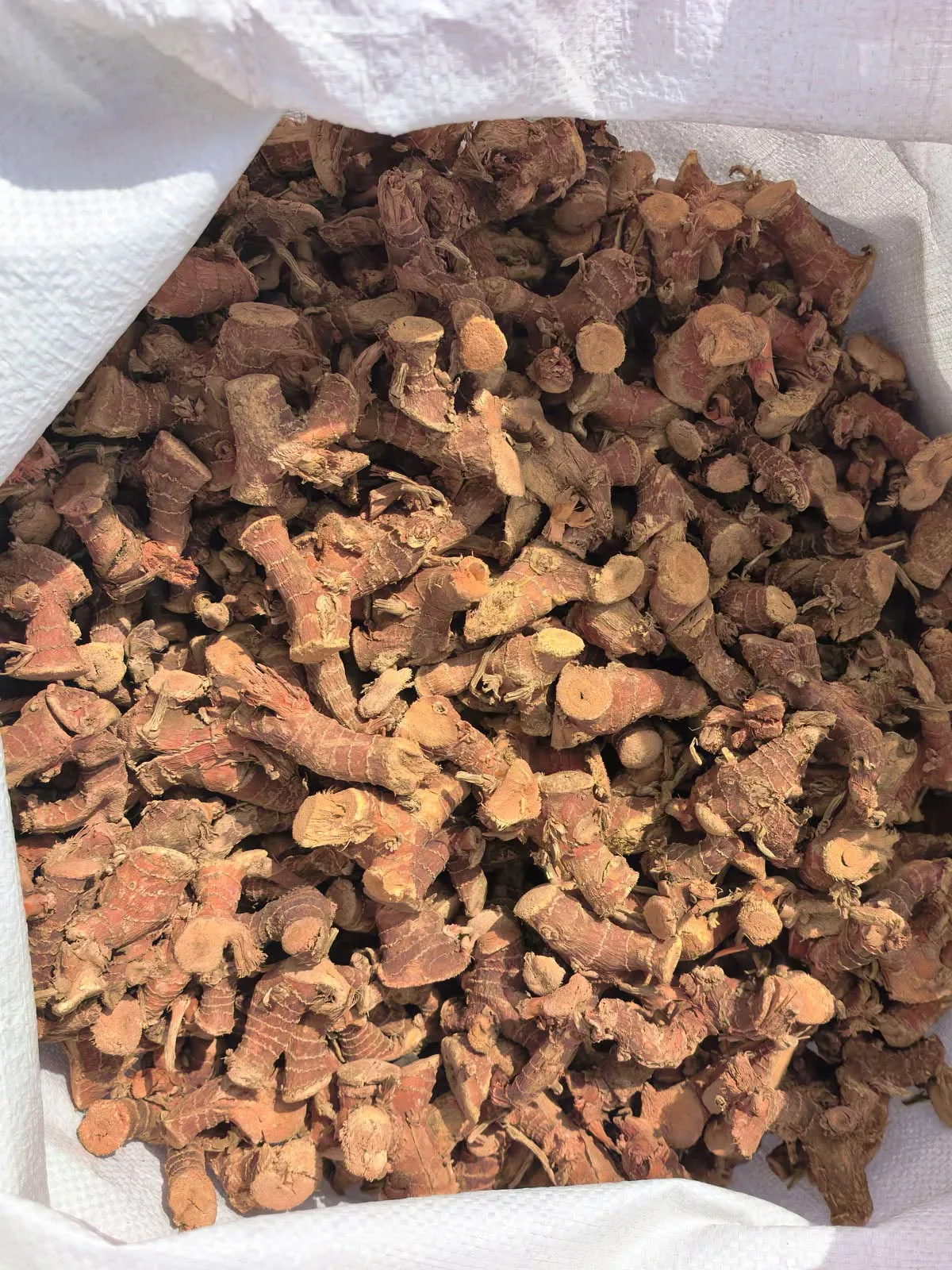
Dried galangal slices
- Cut
- Buyer-defined
- Basis
- Approved sample
Market notes
Here goods arrive before they are sold. Cargo sits in bond and is drawn down as buyers appear, which makes shelf life a commercial variable rather than a number on a label.
Short answer: Galangal buyers serving Panama should confirm use, format, cut or piece range, moisture, packing, volume, destination, documents, and trade term. Goods arrive before they are sold. Stock sits in bond and is drawn down, which makes shelf life a commercial variable rather than a label.
Panama's value to a trader is not its own consumption. It is a staging position: goods arrive, sit in a free zone with duty unpaid, and move on into Latin American markets as demand appears. A distributor here is holding inventory on behalf of customers who have not committed yet, in quantities and combinations that suit them rather than the original shipment.
For an ingredient supplier that decouples two things which are the same event almost everywhere else. Delivery happens when the container lands. The sale happens weeks or months later, to somebody we never dealt with, in a lot size we did not pack. Nothing about the material changes — but almost everything about what the documentation has to survive does.
There is ordinary domestic demand too, from importers supplying local food service and retail. Those buyers behave like buyers anywhere. It is worth separating the two at enquiry, because only one of them needs a specification written for time.
| Product | Relevance here | Suggested grade / format | Note |
|---|---|---|---|
| Dried galangal whole & chunk | Lead | Written piece definition | A larger piece holds condition better through a long storage period and survives repeated break-bulk without degrading in appearance. |
| Dried galangal slices | On request | Buyer-defined cut, sample-led | Where onward customers want a finished cut, accepting that a finer cut has less margin across a long hold. |
Format choice here is driven by holding time more than by process. Tell us how long the stock is expected to sit before it is drawn down.
Both products in detail
A lot drawn down eight months after landing faces a different question from one used on arrival. The onward customer will want to know how much usable life remains, and the answer depends on how the material was specified and how it was stored — not on a figure printed once and forgotten.
So the useful conversation is about the holding period rather than the shipment. Tell us how long stock is expected to sit and the moisture figure and packing are written for that window, not for the day it clears. That is a genuinely different specification from one intended for immediate use.
Free zone stock is drawn down in lots the original shipment never anticipated. If identity is carried only on the outer packaging, it is gone the first time a pallet is split. Marks that tie every inner pack to the analysis certificate cost nothing at production and are the only thing that makes a traceability question answerable a year later — which in a re-export chain is exactly when it gets asked.
By the time this material is used, the party using it may never have heard of us and will have no route back to ask. Everything they can know about the lot has to be carried by the paperwork travelling with it — which is why the document set here is built to be read cold by a stranger rather than to satisfy the buyer who placed the order. Issued at shipment that costs nothing; assembled afterwards it may not be possible at all.
It is tempting to treat free zone storage as ordinary warehousing with the duty deferred. The difference that matters commercially is that the goods have not been imported yet. Until they are drawn out, the party holding them has not committed the capital that customs entry represents — which is precisely why they can hold stock for months and sell it in pieces.
For us that changes what a delivery date means. The date a container arrives is a storage event, not a sales event, and the questions that usually follow a shipment — how did it perform, was the specification right — arrive months later and in fragments. A supplier who expects feedback on the usual timetable will conclude wrongly that nothing was wrong.
Goods entering a free zone and goods entering the domestic market are treated differently, and the requirements that apply on final entry belong to whichever country the material is eventually drawn into. Plant material travels with a phytosanitary certificate, with conditions confirmed per consignment.
Colón and the adjacent terminals for free zone stock, with Balboa on the Pacific side where a routing or an onward destination favours it.
Tanjung Priok to Panama, sailing schedule and transit stated in the quotation for the booking offered. This is a long route and transhipment is normal, so the transfer point belongs in the quoted transit.
Two requirements at once: an outer that stacks safely for months in a warm climate, and an inner unit small enough that drawing down a partial lot does not mean opening and resealing. Tell us the typical draw-down size and the pack is built around it.
The specification should account for the storage period rather than the voyage alone. A figure comfortable on arrival can drift over months in an unconditioned warehouse, and that drift is discovered by the onward customer rather than by you.
Enquiries arrive in Spanish and English, and the trade name is galanga. Because documents here are read by parties in several countries and often long after issue, carrying Alpinia galanga alongside the trade name matters more than in a market where the buyer and the user are the same party.
Commercially, expect a discussion about holding cost and draw-down rather than about immediate consumption, and expect the buyer to think in terms of inventory turns. Say what your expected holding period is at enquiry — it changes the specification more than the volume does.
Approve a physical sample before any container commitment. The approved sample becomes the acceptance reference.
Format, tolerances, packing, and documents recorded before production. No verbal promises.
Trial quantities and mixed loads are reviewed before quotation — you are not forced into full-container risk.
It should. A moisture figure and a packing brief written for immediate use give you no margin across a long hold in a warm climate, and the drift is discovered by your onward customer rather than by you. Tell us the expected holding period and both are written for it.
That depends on the specification agreed and the storage conditions, which is why it is worth setting deliberately rather than inheriting. Tell us what you need to be able to state downstream and we will tell you honestly whether the specification supports it.
By having identity on the inner pack rather than only the outer, agreed before production. Once a pallet is split, identity carried only on the shipping mark is gone — and in a re-export chain the traceability question usually arrives long after that point.
Whichever country the material is finally drawn into, and that is not something we can scope for in advance. What we can do is issue documents complete and transferable enough to be presented again, which is what makes a second entry possible at all.
We keep lot records, but you should not have to depend on that. The document set is issued so it can be filed and produced by you without coming back to origin — which matters more here than anywhere, because by then the material may have passed through two owners.
Destination is pre-filled. Tell us the product, the volume, and how long the stock is expected to be held before draw-down — that answer changes the specification more than the quantity does.
Complete briefs receive a substantive reply from the export desk — not an autoresponder. Incomplete enquiries receive clarifying questions the same day.