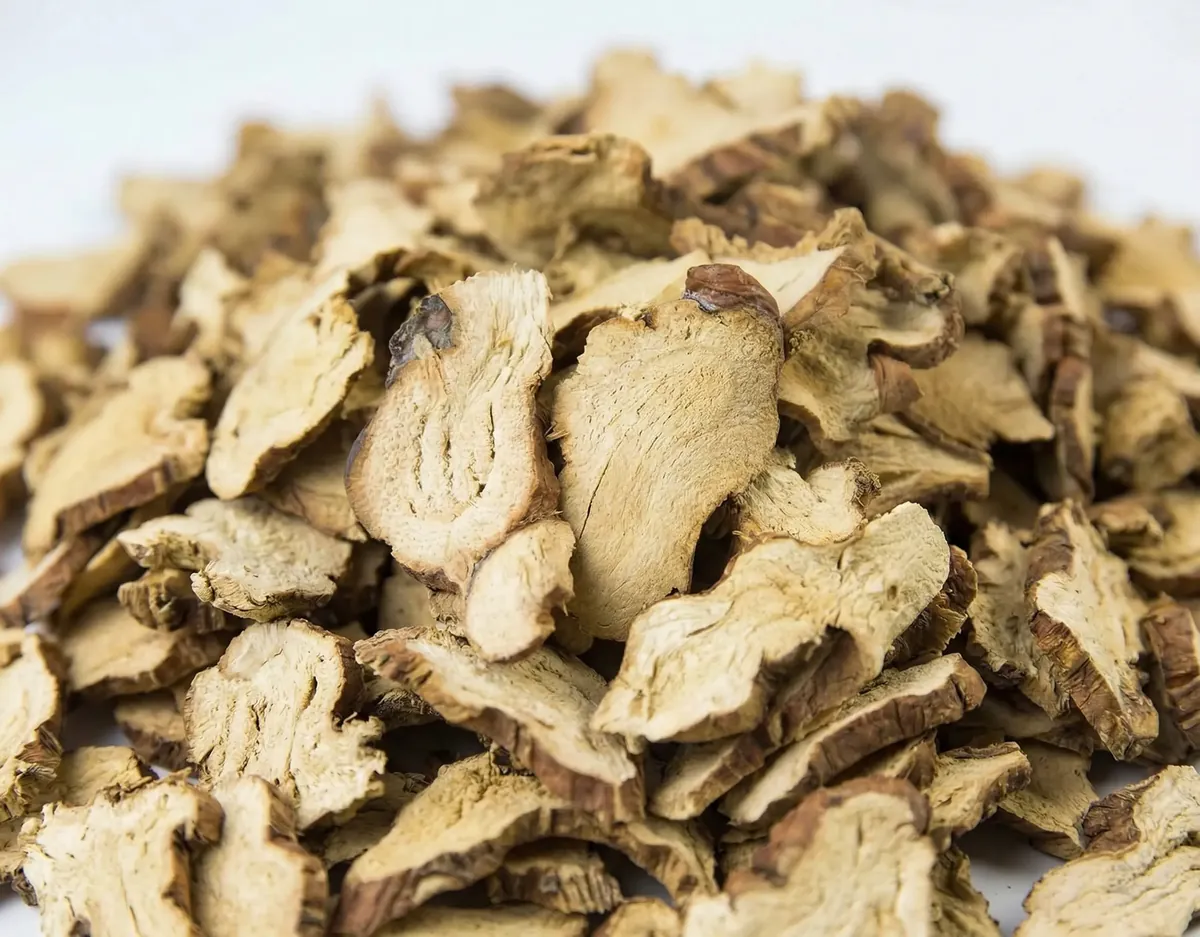
Dried galangal slices
- Cut
- Buyer-defined
- Basis
- Approved sample
Market notes
This is the one destination where the buyer may also be our competitor somewhere else. That is ordinary in the spice trade, and it makes one question worth settling early: what can honestly be said about origin after the material leaves here.
Short answer: Galangal buyers serving Vietnam should confirm use, format, cut or piece range, moisture, packing, volume, destination, documents, and trade term. The one destination where the buyer may also be our competitor elsewhere. Ordinary business, but it makes the origin question worth settling early.
Vietnam is one of the world's larger spice processing and export bases. A great deal of what its facilities handle is bought in, cleaned, graded, sometimes blended, and sold on to buyers in Europe, North America, and across Asia. For an ingredient supplier that produces a customer shape found nowhere else on this list: a buyer with real processing capability who is also an exporter into markets we sell to.
That is entirely normal commerce and we treat it as such. A processor buying raw material to add capability to it is not a competitor in the transaction; they are a customer with unusually well informed opinions about grading, drying, and sorting. The technical conversation here is among the most direct of any destination, because both parties are describing the same operations.
The one thing worth settling early is origin. If material is processed and re-exported here, someone downstream will eventually ask where it came from — and the honest answer involves both of us. It is easier to agree what the documents will say before the first shipment than to reconstruct it when a customer asks.
| Product | Relevance here | Suggested grade / format | Note |
|---|---|---|---|
| Dried galangal whole & chunk | Lead | Written piece definition | Processors here have sorting, cutting, and milling capability, and buying a finished cut removes value they would rather add themselves. |
| Dried galangal slices | On request | Buyer-defined cut, sample-led | Where a defined cut goes directly into a blend or a pack without further reduction. |
The larger format leads decisively here. A processing buyer is paying for raw material, not for work they can do more cheaply themselves.
Both products in detail
Food safety control applies and the consignment carries a phytosanitary certificate issued against it. The part specific to this destination is downstream of that: where material is imported to be processed and exported again, separate customs arrangements may apply to it, and which of them fits your operation is for your broker to establish rather than for a supplier to describe in general terms.
We issue a certificate of origin for the material we ship and documentation that ties it to the lot you receive. That is a factual record of what left Indonesia, and it is yours to hold and to forward.
What we cannot do is make any statement about how the material is described after it has been processed, blended, or combined with other lots here. Those descriptions are determined by your own operations and by the rules of the market you sell into, and they are your obligation rather than ours. We say this plainly not as a caution but because a supplier who is vague about it is less useful to you: if your customer asks for origin evidence, you need to know exactly what we can substantiate and what we cannot.
It is worth saying plainly that this is not an ordinary buyer relationship. Vietnamese processors export spice into several of the markets on this list, so material we supply here can compete with material we supply elsewhere once it has been through your plant. We do not regard that as a problem, and we would rather name it than have it sit unspoken in a first exchange.
What it does change is the value of a clear boundary. We supply against an agreed specification and issue documents for the lots we ship; what the processed product is called and how it is described in your own sales is your commercial decision and your compliance obligation, not something we take a position on. That line is easier to hold if it is drawn at the start rather than after a question arrives.
Where a downstream customer requires single-origin material, segregation has to be designed rather than assumed — at our end in how lots are identified, and at yours in how they are stored and processed. Tell us at enquiry if that is the requirement, and the lot identification is built for it. It cannot be applied to material that has already been consolidated.
Cat Lai and the Ho Chi Minh City terminals for buyers in the south, where most processing capacity sits. Hai Phong serves the north.
Tanjung Priok to Ho Chi Minh City, sailing schedule and transit stated in the quotation for the booking offered. This is among the shortest routes on our destination list and services are frequent.
A processing buyer opens material into equipment rather than onto a shelf, so larger net weights and a simple outer are usually preferable to retail-oriented packing. Tell us the intake and the pack is specified to it rather than to a presentation standard nobody here needs.
If single-origin traceability matters downstream, marks that tie every pack to the analysis certificate are what make it possible. They cost nothing at production and cannot be added afterwards.
Enquiries arrive in Vietnamese and English, and the technical vocabulary is shared because both sides work with the same commodity. Anchoring specifications to Alpinia galanga remains worthwhile, particularly where a downstream customer will read the description — several related rhizomes are traded across this region under overlapping names, and a processing chain multiplies the chances of a substitution going unnoticed.
Commercially, expect a direct and technically confident negotiation. A processing buyer knows what sorting costs because they do it, which makes the discussion about where value is added unusually straightforward — and makes a supplier who inflates the difficulty of routine work easy to spot.
Approve a physical sample before any container commitment. The approved sample becomes the acceptance reference.
Format, tolerances, packing, and documents recorded before production. No verbal promises.
Trial quantities and mixed loads are reviewed before quotation — you are not forced into full-container risk.
No. Buying raw material to add capability to it is ordinary business and we treat it that way. What it does affect is the origin conversation, which is worth settling before the first shipment rather than when a downstream customer asks.
That is determined by your operations and by the rules of the market you sell into, not by us. What we can give you is a factual certificate of origin for the material we shipped and documentation tying it to the lot you received. What we will not do is make claims about a description we have no visibility of — being precise about that boundary is more useful to you than being accommodating about it.
Yes, if it is designed rather than assumed. It requires lot identification at our end and segregated handling at yours, and it has to be agreed before production because it cannot be applied to material that has already been consolidated. Tell us at enquiry and we build for it.
Usually for a profile or a volume your existing supply does not give you in a given period, or because a customer specified origin. If neither applies, your existing arrangement is probably the right one and we would rather say so than argue.
Almost certainly, if you have reduction capability. You would be paying us to do work you can do more cheaply, and the larger format also survives handling better. Slices make sense only where a defined cut goes straight into a pack without further processing.
Destination is pre-filled. Tell us the product, the volume, and whether any downstream customer requires single-origin traceability — that has to be designed before production, not after.
Complete briefs receive a substantive reply from the export desk — not an autoresponder. Incomplete enquiries receive clarifying questions the same day.