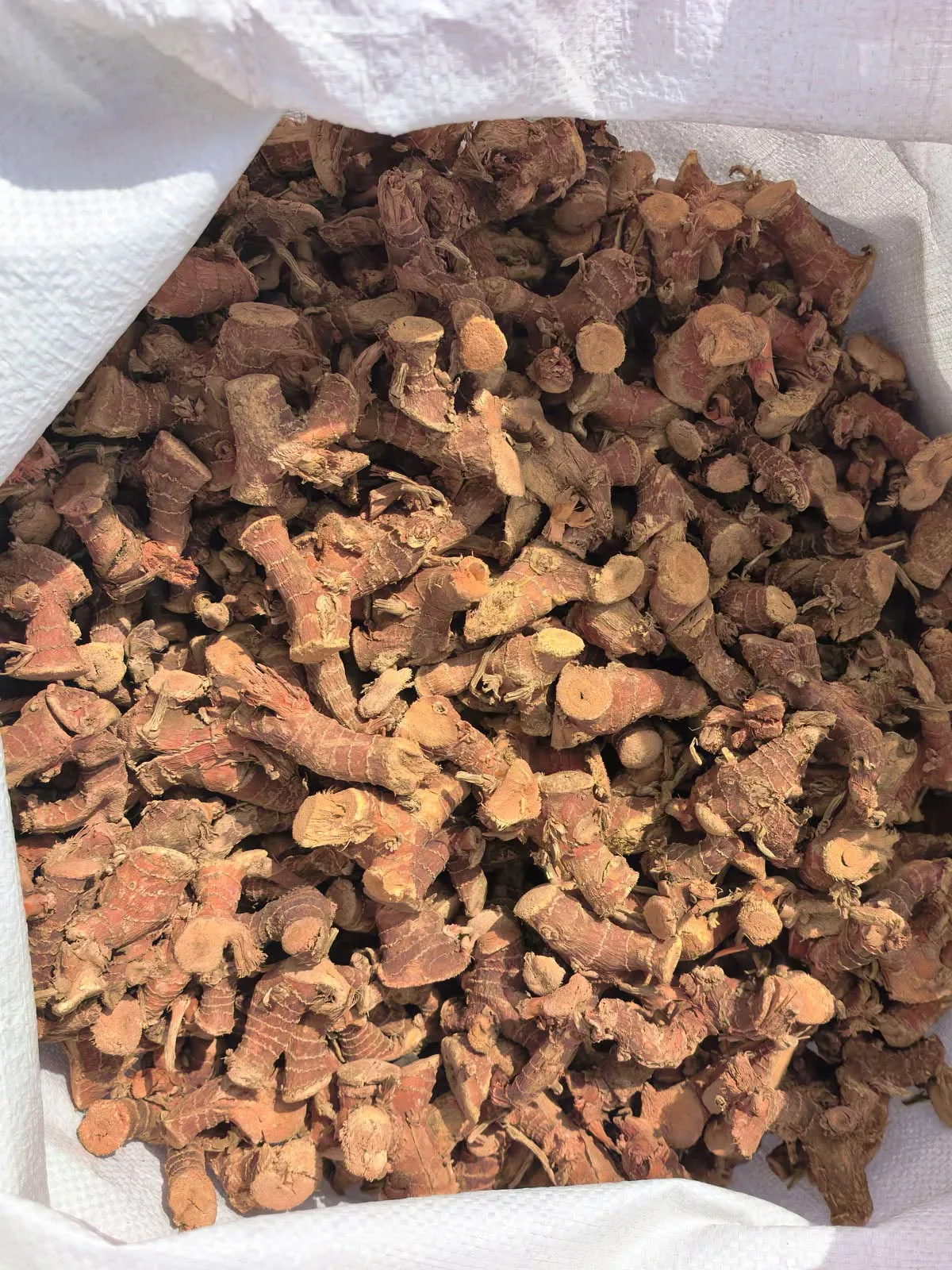
Dried galangal slices
- Cut
- Buyer-defined
- Basis
- Approved sample
Market notes
Cargo can reach this market across the Pacific, through the Black Sea, or up into the Baltic. That is not a choice between ports but between oceans, and until it is settled no transit figure we could quote would mean anything.
Short answer: An answerable galangal brief for Russia includes application, preferred format, physical tolerance, moisture, packing, order size, destination, documents, and Incoterm. Gateways sit on the Baltic, the Black Sea, and the Pacific — the choice is an ocean rather than a port, and it moves the schedule by weeks.
Enquiries come from food manufacturers, spice packers, and importers supplying both retail and foodservice. The buyer profile is ordinary and the material is bought as an ingredient rather than as a novelty.
What is not ordinary is the geography. This is a single destination market served by maritime gateways on three separate seas, and the distance between them is measured in thousands of kilometres of land as well as in sea miles.
That hands a supplier an unusual first task. Everywhere else we can begin with the specification and treat the routing as an operational detail settled later. Here the routing has to be settled first, because it changes the schedule by weeks and it changes what the packing has to survive.
| Product | Relevance here | Suggested grade / format | Note |
|---|---|---|---|
| Dried galangal slices | Lead | Buyer-defined cut | Manufacturers and packers buying a dried ingredient to a written specification. |
| Dried galangal whole & chunk | On request | Written piece definition | Where grinding or cutting is done in-house after arrival. |
Grade is settled the usual way here. What is not usual is that the packing specification cannot be finalised until the maritime approach is known.
Both products in detail
This market sits inside a regional economic union, so clearance happens once and the technical requirements are union-level rather than national, with conformity handled by the importer in-market. How that works is set out on our Kazakhstan page and is not repeated here.
A Pacific approach is the shortest sea leg from Indonesia and the longest land leg afterwards. A Black Sea approach reverses that for buyers in the south and west. A Baltic approach is the longest sailing of the three and lands closest to the north-west.
None of those is better in general, and we do not present one as our recommendation. The buyer knows where the goods have to end up, and the inland leg after discharge is what decides — which means the answer belongs to the party we are quoting to, not to us.
Seasonal conditions can affect a northern approach; where that is relevant the reasoning is the same as on our Finland page and we leave it there rather than restating it.
Because a single figure would be an average across three routings that differ by weeks, and an average nobody can actually book is worse than no figure at all. We quote against the approach the buyer names, and if the approach changes we re-quote rather than let the old number stand.
Service patterns change and an approach chosen this quarter is not guaranteed next quarter. So the pack is specified against the longer of the plausible paths rather than the one currently booked, including the inland leg that follows discharge.
That costs a little more per shipment and removes a failure mode we would otherwise discover only once: cargo specified for a short sailing arriving at the end of a long one, with nobody having decided to change anything.
Terms, documentary arrangements, and settlement are agreed with the export desk before production is scheduled, as on any route, and the arrangements available to a buyer are the buyer's to confirm with their own bank and broker. We do not advise on them.
Named by the buyer at enquiry — Pacific, Black Sea, or Baltic. Everything else in this table is specified after that answer rather than before it.
Quoted for the approach actually booked, never as a single figure for the country.
Long on every one of the three approaches, and controlled from the buyer side. We treat it as a range supplied by the buyer rather than as something we can commit to.
Built for the longer plausible path rather than the one booked, so a change of service between orders does not quietly leave the cargo under-specified.
The concern is the total time in transit and the number of handling points, not the sailing alone. Liner and ventilation are agreed against the full path including the land leg, and the arrival figure is stated rather than assumed.
Correspondence runs in Russian and English, and specifications are commonly translated for internal use. The botanical name Alpinia galanga is what we anchor the description to, because it is the part that survives translation into a document read by a customs broker at a gateway thousands of kilometres from the buyer.
Commercially the planning difference is sequence rather than terms. On most routes the specification is agreed and the logistics follow. Here the approach is named first, the schedule and the packing are written against it, and the specification is finalised knowing what the goods will actually have to travel through.
Approve a physical sample before any container commitment. The approved sample becomes the acceptance reference.
Format, tolerances, packing, and documents recorded before production. No verbal promises.
Trial quantities and mixed loads are reviewed before quotation — you are not forced into full-container risk.
There is no single answer, and a supplier who gives one is averaging across routings that differ by weeks. Tell us whether the goods come in across the Pacific, through the Black Sea, or into the Baltic, and we quote against that approach.
We do not make that recommendation. It is decided by where the goods have to end up inland, which you know and we do not. Our part is to write the documents and the packing to whichever you name.
Because services change between orders and an approach is not guaranteed to repeat. Specifying for the longer plausible path costs a little more per shipment and prevents cargo arriving at the end of a long journey in a pack that was designed for a short one.
Conformity is handled by the importer in-market rather than by us — the mechanism is the same one described on our Kazakhstan page. We supply the origin-side documents and the lot data that your assessment relies on.
We commit to the shipment date and to the sea leg as quoted. The inland leg after discharge is long on every approach and controlled from your side, so we carry it as a range you supply rather than as a promise we are not in a position to keep.
Destination is pre-filled. Name the maritime approach and the inland destination after discharge — with those two, the schedule and the pack specification stop being guesswork.
Complete briefs receive a substantive reply from the export desk — not an autoresponder. Incomplete enquiries receive clarifying questions the same day.